Blog
Insights, analysis and perspectives on private markets, venture capital, and alternative investments.

 Market Insights
Kalshi's $40 Billion Funding Push Puts Prediction Markets on the Private Market Map
Kalshi is finalising funding at around US$40 billion, up from US$22 billion in May, while Polymarket is valued at US$21 billion. What PitchBook's analysis and the regulatory risks mean for investors.
 ·October 13, 2026
 Market Insights
Why ASIC Has Put Australia's Private Credit Market on Notice
ASIC has escalated its scrutiny of Australia's A$200 billion private credit market, issuing stop orders and warning that standards have not kept pace. What private credit is and what to check before investing.
·October 13, 2026 Market Insights
Canva Is Worth $42 Billion. When Does It IPO?
Canva is valued at US$42 billion and says it is IPO ready, but its co-founder now expects a 2027 listing. When Canva might list, what it is worth and how investors can get exposure before the IPO.
·October 13, 2026 Company News
AI Investment Across Asia Pacific: The Spending Surge and How Australian Investors Can Access It
AI investment across Asia Pacific hit record levels in 2025-2026, from Databricks' US$350M Singapore build to Microsoft's A$25B in Australia. Where the money is going, and how Australian and New Zealand wholesale investors can access the private companies driving it.
 ·September 30, 2026
 Private Markets
What the PitchBook 2026 ANZ Private Capital Report Says About Where the Market Is Heading
PitchBook's 2026 ANZ report: VC deal value rose 12.3% to US$4B as deal count fell for a fourth year, and fundraising hit US$17.4B, led by Macquarie. What it means for wholesale investors.
·September 28, 2026 Market Insights
Physical AI Raised More in Six Months Than in the Previous Three Years Combined
How to invest in robotics companies including Figure AI, 1X Technologies and Apptronik. Covers physical AI, SPV access, wholesale investor rules, valuation frameworks, and listed versus private alternatives.
·September 28, 2026 Private Markets
AI Has Minted an $852 Billion Company, Yet It Still Isn't Listed.
How to invest in AI companies, from listed stocks to pre-IPO positions in private companies like OpenAI. Covers SPVs, wholesale investor rules, valuations and what to check before committing capital.
·September 28, 2026 Market Insights
Hyperscalers and Nvidia Are on Pace to Issue a Record $320 Billion in Bonds This Year, Up $120 Billion From 2025
Hyperscalers and Nvidia are set to issue a record $320 billion in bonds in 2026, up $120 billion from last year, equal to 70% of new long-duration US Treasury issuance. Here's what the SPV structures behind that debt actually mean, and why some analysts aren't worried.
·September 22, 2026 Market Insights
19 New Decacorns in 2026 – The US Has Never Seen This Before
19 US startups crossed $10 billion in valuation in 2026, already surpassing 2025's full-year total. There are now 63 active decacorns in the US, up from 26 in 2021. Here is what the data shows.
·September 22, 2026 Market Insights
The Industry Funding AI Is Still Figuring Out How to Use It
36% of PE firms use AI day-to-day. 7% have full integration. 43% are still experimenting. FTI's 2026 survey shows the industry funding AI is still figuring out how to use it internally.
·September 22, 2026 Market Insights
Pasqal Just Listed on Nasdaq & Neutral-Atom Quantum Computing Has Its First Public Market Test
Pasqal listed on Nasdaq on August 28 under ticker PSQL, becoming the first neutral-atom quantum computing company to reach public markets. Here is what the listing means for quantum computing and the deep tech IPO window.
·September 22, 2026 Market Insights
The Biggest Private Market Raises of August 2026: What They Mean for Australian Investors
August's largest private rounds clustered in three places: defence technology, AI infrastructure, and voice AI. Here is a rundown of the month's biggest raises, and what an Australian investor watching from the outside can actually do about them.
·August 27, 2026 Market Insights
What Is Recursive Self-Improvement, and Where’s The Next Battlefield
Recursive self-improvement is already here — unevenly, in domains where fast, trustworthy validation exists. Here is a framework for identifying where it works, where it fails, and what that means for private market investors.
 ·August 24, 2026
 Market Insights
AI Capital Is Going Global: $8.8 Billion Flowed Into Emerging Markets in H1 2026
Private capital into emerging market AI projects hit $8.8 billion in H1 2026. Apollo committed $20 billion to Mexico. Here is why the geography of the AI build is changing and what it means for investors.
·August 13, 2026 Market Insights
The 2021 Vintage Has Returned 5 Cents on the Dollar
2021 vintage VC funds have returned 0.05x DPI, the lowest since 1997. Here is what it means for LPs, why DPI replaced IRR as the metric that decides re-ups, and what it means for secondary markets.
·August 13, 2026 Market Insights
Reflection AI: From $545 Million to $27.5 Billion in Under a Year
Reflection AI went from $545 million to $27.5 billion in under a year, backed by Nvidia, JPMorgan, and Sequoia. Here is why DeepSeek's moment created the opportunity, and what the speed of repricing signals about the AI private market.
·August 11, 2026 Market Insights
AI Absorbed 80% of Global Venture Capital in Q1 2026. The Rest of the Market Is Competing for What's Left.
AI absorbed 80% of all global venture capital in Q1 2026, up from 48% in 2025. Here is what that concentration means for biotech, climate, fintech, and what it signals for investors in less-trafficked segments.
·August 11, 2026 Market Insights
OpenAI's IPO Timeline Keeps Shifting. Here Is What the Current State of Play Actually Looks Like.
OpenAI confidentially filed for an IPO in June 2026, targeting Q4 at near $1 trillion. SoftBank has a $40 billion loan due March 2027. Prediction markets give 33% odds of a 2026 listing. Here is where the timeline actually stands.
·August 11, 2026 Market Insights
The SVB H1 2026 State of Markets Report: A Venture Rebound With an Asterisk
SVB's H1 2026 State of Markets report shows 21 tech IPOs (best since 2021) and half of unicorns above $800M revenue, but VC fundraising hit a seven-year low and the top 1% captured a third of all investment.
·August 11, 2026 Market Insights
Quantum Computing Is Creating a New Computing Stack. Here's Where the Next Opportunities May Emerge
Venture funding into quantum startups surged to $12.6B in 2025, but the durable profits may not belong to the hardware winners. Here is where the economic value is actually accruing across the emerging quantum stack.
 ·August 3, 2026
 Market Insights
Anduril Is Targeting a $100 Billion Valuation. Eight Weeks Ago It Was $61 Billion.
Anduril is in talks to raise at a $100 billion valuation, eight weeks after closing at $61 billion. Here is the deal structure, why the valuation is moving this fast, and what it means for the defence tech private market.
·July 27, 2026 Market Insights
Nvidia Is Backstopping $250 Billion of OpenAI's Data Centre Debt, and The Scale of This Has No Precedent.
Nvidia is in talks to guarantee $250 billion in financing for OpenAI's 10-gigawatt Ohio data centre, part of a $500 billion-plus project. Here is what the deal structure means for OpenAI's IPO and Anthropic's positioning.
·July 27, 2026 Market Insights
86% of Wealth Advisors Are Increasing Private Market Allocations in 2026
Hamilton Lane's 2026 Global Private Wealth Survey shows 86% of wealth advisors plan to increase private market allocations, 83% view risk/reward favourably, and 81% say education drives client interest. Here is what the data shows.
·July 23, 2026 Market Insights
When Private Markets Start to Look Like an Index: Wellington's H2 2026 Warning
Wellington Management's midyear outlook warns that mega-cap AI concentration is turning private markets into a public index. Here is what it means for how wholesale investors should think about portfolio construction.
·July 23, 2026 Market Insights
The Q2 2026 Venture Monitor: Record Numbers, Narrow Recovery
The Q2 2026 PitchBook-NVCA Venture Monitor shows US startups raised $412.7 billion in H1 2026. But 87.5% went to megadeals, 86% to AI, and three firms took 48.1% of all fundraising. Here is what the concentration data means.
·July 23, 2026 Market Insights
The Constraint Nobody Talks About: Energy Is the Binding Limit on AI Growth
Between 30-50% of planned US data centre projects are delayed due to grid bottlenecks. Panthalassa and Valar Atomics are two private companies building around the energy constraint that is limiting AI growth.
·July 23, 2026 Market Insights
Kimi K3 Is the Largest Open-Weight Model Ever. Why Does That Matter for Anthropic and OpenAI?
Moonshot AI's Kimi K3 is the largest open-weight model ever released, ranking #1 on the Frontend Code Arena. Here is what the open vs closed model divide means for Anthropic and OpenAI's IPO valuations. ARTICLE
·July 20, 2026 Market Insights
Australia's Most Promising Private Startups to Watch
From $1B sovereign space capabilities to an $11B global fintech giant, Australia’s private tech ecosystem is rapidly maturing toward public listings. Here is what six top-tier Australian startups mean for pre-IPO investors.
 ·July 20, 2026
 Market Insights
Humanoid Robotics in 2026: Where the Real Investment Bets Are
Global humanoid robotics investment hit $6.95 billion in China alone in Q2 2026, while Korea, Japan, Norway, and the US all moved simultaneously. Here is what is happening across the stack right now.
·July 20, 2026 Market Insights
Why Private Markets Are Becoming the Home of Deep Tech
The most consequential deep tech companies of the decade spent their highest-growth years entirely in private markets. Here is what that means for investors trying to get exposure before the IPO.
 ·July 15, 2026
 Market Insights
Physical AI: The $263 Billion Category That Didn't Exist Ten Years Ago
Physical AI and robotics has overtaken fintech as the second-largest category among top 100 US private companies. Robotics raised $55.8 billion in H1 2026 alone. Here is what it means for private market investors.
·July 15, 2026 Market Insights
Is AI Replacing Workers? What the Labour Market Data Shows
AI adoption is accelerating and layoffs are rising, but the data on whether AI is actually replacing workers is more complicated than the headlines suggest. Here is what the labour market data shows.
 ·July 15, 2026
 Market Insights
$510 Billion, One Week, One Acquisition: What H1 2026 Says About Where Private Capital Is Going
Global venture funding hit $510 billion in H1 2026, with OpenAI and Anthropic taking 43% of it. Then SpaceX bought Cursor for $60 billion four days after its IPO. Here is what it all means for private market investors.
·July 9, 2026 Market Insights
Why Defence Tech Is Now a Private Market Asset Class: The Quantum Systems $1.2 Billion Signal
Quantum Systems raised $1.2 billion at an $8 billion valuation on July 2, co-led by Blackstone and Airbus. Here is what it signals about defence tech as a private market asset class.
·July 9, 2026 Market Insights
Anthropic Is Spending $21.6 Billion on Australian Data Centres. Here Is What It Means.
Anthropic is seeking A$21.6 billion in Australian data centre capacity ahead of its October IPO. Here is what the deal means for infrastructure investors, pre-IPO holders, and the unresolved copyright question.
·July 9, 2026 Education
How to Read a Private Company Valuation: A Framework for Wholesale Investors
A private company doesn't have one valuation. It has several, and they measure different things. Here's what the post-money figure, the 409A, and the secondary price each actually tell you, why the headline number overstates by an average of 48%, and how to read any valuation properly.
·July 3, 2026 Market Insights
How SpaceX Split the AI IPO Timeline for OpenAI and Anthropic
OpenAI is delaying its IPO to 2027, but Anthropic is racing toward an October 2026 listing. Both cite SpaceX's post-IPO decline. Here is what the data shows and what it means for pre-IPO investors.
 ·July 2, 2026
 Market Insights
The Magnificent 8, the 10X Paradox, and What Coatue's Thomas Laffont Got Right About Private Markets
Coatue's Thomas Laffont presented data showing centacorns have a 31% chance of a further 10x return. Here is what his Magnificent 8 thesis got right, and what the past month of SpaceX trading and OpenAI's IPO delay have revealed since.
·July 2, 2026 Company News
NonPublic Launches Secondaries Marketplace for Wholesale Investors
NonPublic's Secondaries Marketplace is now live. Existing investors can list eligible positions for sale and buyers can acquire them directly, giving Australian wholesale investors a regulated pathway to trade private market positions.
·June 30, 2026 Market Insights
What Securitize's NYSE Listing Means for the Future of Private Market Infrastructure
Securitize is listing on the NYSE as SECZ on 29 June 2026. Here is what the first regulated tokenisation platform going public means for private market infrastructure and thesis-driven investing.
·June 26, 2026 Market Insights
SpaceX, OpenAI and Anthropic IPOs in 2026: What Pre-IPO Investors Need to Know
SpaceX's record Nasdaq debut, and the confidential IPO filings from OpenAI and Anthropic, explained for wholesale investors weighing pre-IPO exposure and what PitchBook's valuation research reveals about each company before listing.
·June 19, 2026 Education
How to Invest with NonPublic: A Step-by-Step Guide
From signing up to your first investment, here's exactly how NonPublic works. A practical step-by-step guide to accessing pre-IPO deals as a wholesale investor in Australia.
·June 17, 2026 Market Insights
The Energy Problem Behind the AI Boom
AI is becoming an infrastructure problem. This piece examines the relationship between AI investment, data centre expansion, and US energy supply, and what it means for private market investors.
 ·June 11, 2026
 Private Markets
The Private Stock Market Boom: Why Secondaries Are Becoming a Primary Exit Route
Secondary markets reached $226 billion in 2025 and now compete with IPOs as a liquidity channel. Here we look at the mechanics, industry perspectives, and what it means for wholesale investors.
 ·June 10, 2026
 Private Markets
The Distribution Waterfall: How Private Equity Profits Actually Get Divided
A fund can report an A$80 million profit while paying investors A$64 million of it. The distribution waterfall explains the gap. Here's how private equity profits get divided, traced dollar by dollar through all four tiers, with the terms that change what you actually keep.
·June 8, 2026 Market Insights
The Intelligence Layer: How Polymarket and Nasdaq Are Opening Private Markets to Everyone
Polymarket and Nasdaq Private Market recently launched the first real-time, crowd-sourced pricing layer for private companies. Here's what the early prices on SpaceX, OpenAI, and Anthropic actually show, and what it means for Australian investors building pre-IPO exposure.
·June 5, 2026 Education
What Is an SPV? A Complete Guide for Australian Private Market Investors
A Special Purpose Vehicle (SPV) is a separate legal entity that holds shares in a private company on behalf of pooled investors. Here's how Australian SPV structures work, why the choice between Pty Ltd and unit trust matters for your tax, and what fees and risks to weigh up.
·June 5, 2026 Private Markets
What Retail Access to Private Markets Actually Looks Like (And What Wholesale Investors Get Instead)
Retail funds like VCX and Robinhood Ventures are trading at significant premiums to NAV. Here is what that means, and what wholesale investors access instead through direct SPV structures.
 ·June 4, 2026
 Education
Pre-IPO vs IPO Investing: What's the Difference and Which Is Right for Australian Investors?
Pre-IPO and IPO investing look similar but capture fundamentally different parts of the value curve. The academic data on returns at each stage tells a story most investors miss, and the implications for Australian portfolios are clearer than the marketing suggests.
·June 4, 2026 Education
Private Markets Asset Classes: A Guide to Where Capital Actually Goes
Private markets span private equity, venture capital, private credit, infrastructure, and real assets. Learn how each works, what drives returns, and how they fit in a portfolio.
·May 29, 2026 Private Markets
Private Market Secondaries: The $226 Billion Liquidity Market Reshaping Private Investing
Private market secondaries hit a record $226 billion in 2025. Here is what the secondary market is, how LP-led and GP-led transactions work, and why individual investors have been largely locked out until now.
·May 21, 2026 Education
Why Private Companies Stay Private: The Structural Forces Behind the Public Market Exodus
The number of US-listed companies has halved since 1996, while private market capital has grown to over US$13 trillion. The shift isn't cyclical. Four structural forces explain why companies stay private now, and the Australian implications are sharper than most realise.
·May 21, 2026 Private Markets
How Australian Family Offices Are Allocating to Private Markets
Australian family offices have grown from 10% to 40% of all domestic private capital investors in just four years. Here's where they're allocating, why super funds are losing ground, and what individual wholesale investors can learn from their behaviour.
·May 20, 2026 Education
The Risks of Private Market Investing in Australia: What Wholesale Investors Should Understand
Private market investing carries five risks that public markets don't: illiquidity, valuation opacity, information asymmetry, structural complexity, and concentration. ASIC has flagged the sector as a 2026 priority. Here's what the risks actually mean and how to participate sensibly.
·May 11, 2026 Investment Strategy
Cross-Border Capital: Why the Best Australian Portfolios Now Look Global
The classic Australian portfolio: big four banks, resources, dividends, franking credits. It worked for a generation. But the most consequential wealth creation of the next decade is happening in places the ASX simply does not reach.
·May 8, 2026 Market Insights
The New Rules of Private Market Investing
The investing rulebook has changed. The best companies are staying private longer, public markets are hollowing out, and more than 50% of value creation now happens before the IPO bell rings. The old rules no longer apply.
·May 7, 2026 Education
How Do I Know If I Qualify as a Wholesale Investor in Australia?
You qualify as a wholesale investor in Australia if you meet one of four tests under the Corporations Act. Here's how to check, how to get certified, what you give up in exchange for the access, and the threshold changes ASIC has proposed.
·April 27, 2026 Investment Strategy
Why Australian Investors Should Pay Attention to Defence Tech
Australia just committed A$425 billion to defence over the next decade. The companies building the technology it needs are still private. Here's why defence tech is becoming an asset class, and how to access it.
·April 20, 2026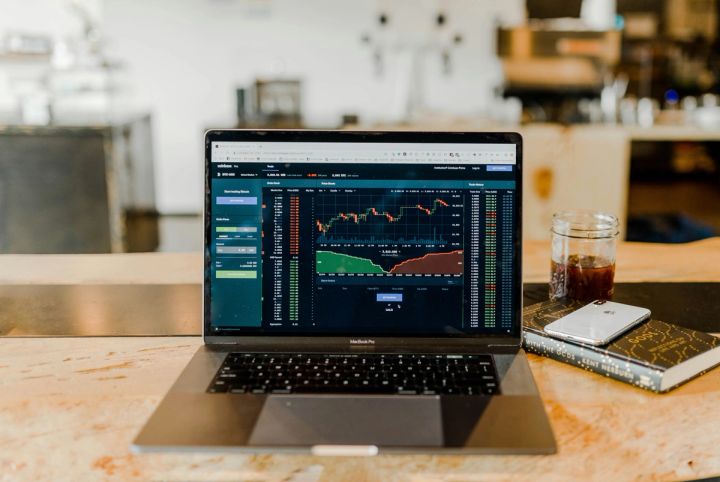 Market Insights
Pre-IPO Investing in Australia: What You Need to Know
The world's most valuable companies are still private. Australian wholesale investors can access them before they list, but the structures, eligibility rules, and risks work differently from anything on the ASX.
·April 15, 2026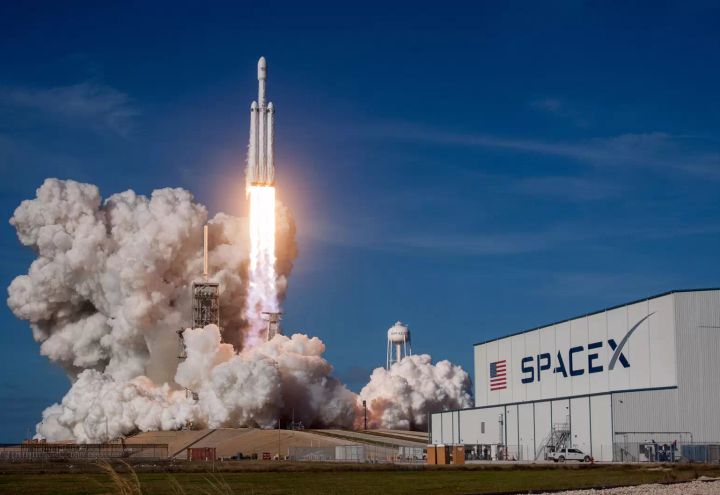 Private Markets
How to Invest in SpaceX in Australia
SpaceX is targeting the largest IPO in history. For Australian investors, there are five ways to get exposure before and after it lists. Not all of them give you what you think you're buying.
·April 13, 2026