Artificial Intelligence has emerged as one of the fastest-growing technology markets in the world, driven by its ability to improve productivity and automate a growing range of business activities. While the economic benefits of AI appear increasingly compelling, its long-term impact on employment remains heavily debated. This piece examines the relationship between AI adoption, labour market trends and robotics economics to determine whether AI is really reshaping the workforce or whether expectations have moved ahead of reality.
The evidence suggests that businesses are adopting AI primarily to improve efficiency and productivity rather than to preserve employment. While labour market data indicates that white-collar occupations may be experiencing greater disruption than physical and field-based roles, the overall impact of AI on employment remains uncertain. What is clear, however, is that investors continue to commit significant resources toward AI development, reflecting a growing belief that productivity gains will outweigh the costs of transition.
Part 1: The Setup
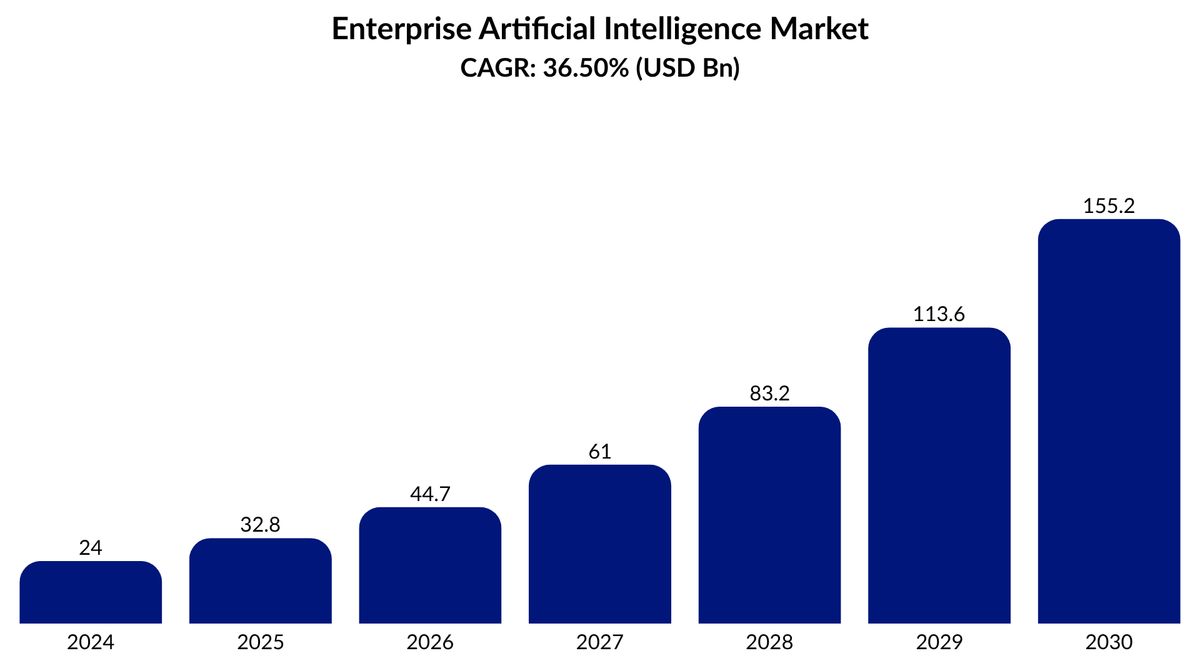
The enthusiasm surrounding AI is driven by a simple economic proposition: higher productivity and lower costs. Studies suggest AI can improve worker efficiency by approximately 25%, allowing businesses to generate greater output without a proportional increase in labour. This potential improvement in operating leverage helps explain why corporations, investors, and governments continue to allocate significant resources toward AI development.
Source: The Research Institute of Economy, Trade and Industry (RIETI), MIT, CEPR, NP Estimates
Artificial Intelligence has become one of the fastest-growing technology markets in history. The enterprise AI market is expected to grow from USD24 billion in 2024 to USD155 billion by 2030, representing a CAGR of 36.5%. Capital markets, corporate executives, and venture investors have largely converged on the view that AI will fundamentally change how businesses operate.
The enthusiasm surrounding AI is driven by a relatively simple economic proposition. For decades, businesses have sought to improve profitability through either revenue growth or cost reduction, with labour costs often representing one of the largest operating expenses across most industries. Unlike previous software tools that primarily improved specific workflows, AI has the potential to enhance the productivity of a broad range of knowledge-based tasks, allowing workers to produce more output within the same amount of time.
Source: The Research Institute of Economy, Trade and Industry (RIETI) Japan, NP Estimates
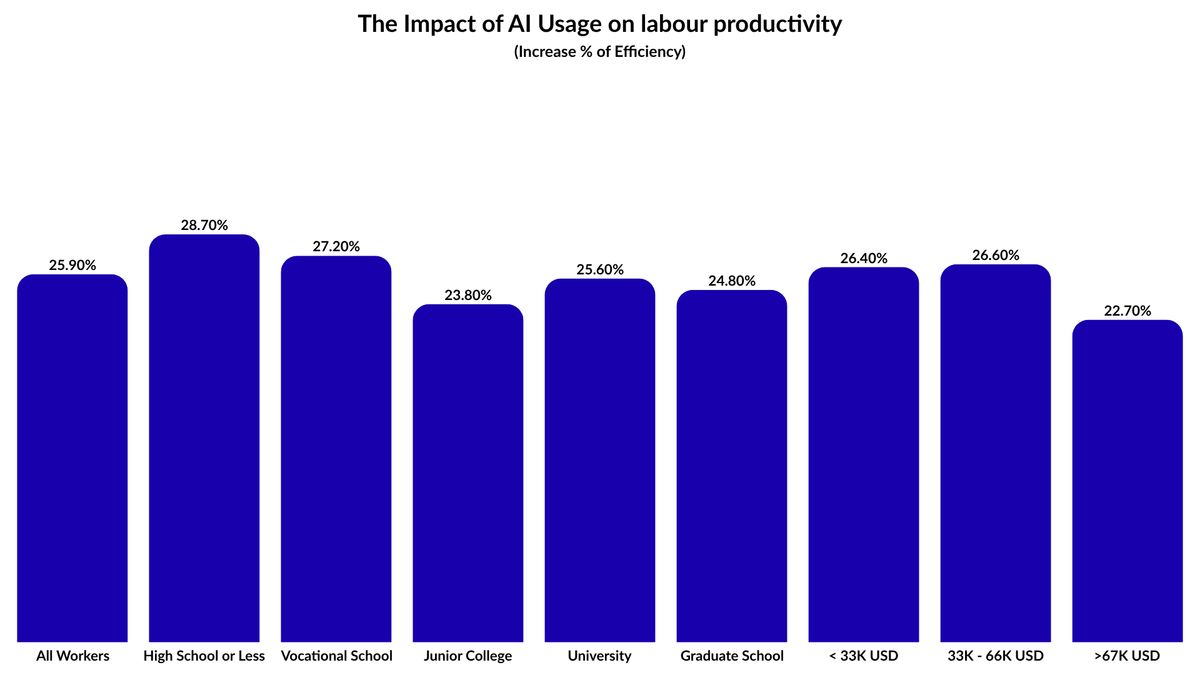
The optimism surrounding AI is supported by measurable improvements in worker productivity. Studies show that AI adoption increases labour efficiency by an average of 25.9%, with productivity gains observed across all education and income groups. Workers with a high school education or less reported efficiency improvements of 28.7%, while university and postgraduate degree holders reported gains of 25.6% and 24.8%, respectively. A similar pattern is observed across income levels, where workers earning less than USD33,000 and between USD33,000 to USD66,000 experienced productivity gains of 26.4% and 26.6%, respectively. These findings represent a broad-based productivity tool capable of enhancing worker output across a wide range of occupations and skill levels.
If these productivity gains can be replicated at scale, the implications for businesses are significant. A workforce that is 25% more productive can theoretically generate greater output without a proportional increase in headcount, improving operating leverage and lowering labour costs as a percentage of revenue. From an investor's perspective, this helps explain why AI has become one of the most heavily funded technology themes in recent years. The potential economic benefits are substantial, and early evidence suggests that the technology is capable of delivering meaningful improvements in workplace efficiency.
Source: Reuters, Wallstreet Journals, Theedge, Bloomberg, NP Estimates
AI adoption is no longer limited to a handful of technology companies. Businesses across industries are increasingly integrating AI into their daily operations, attracted by the promise of higher productivity and improved efficiency. As adoption accelerates, a growing number of companies are beginning to reassess how work is performed and how labour resources are allocated across their organisations.
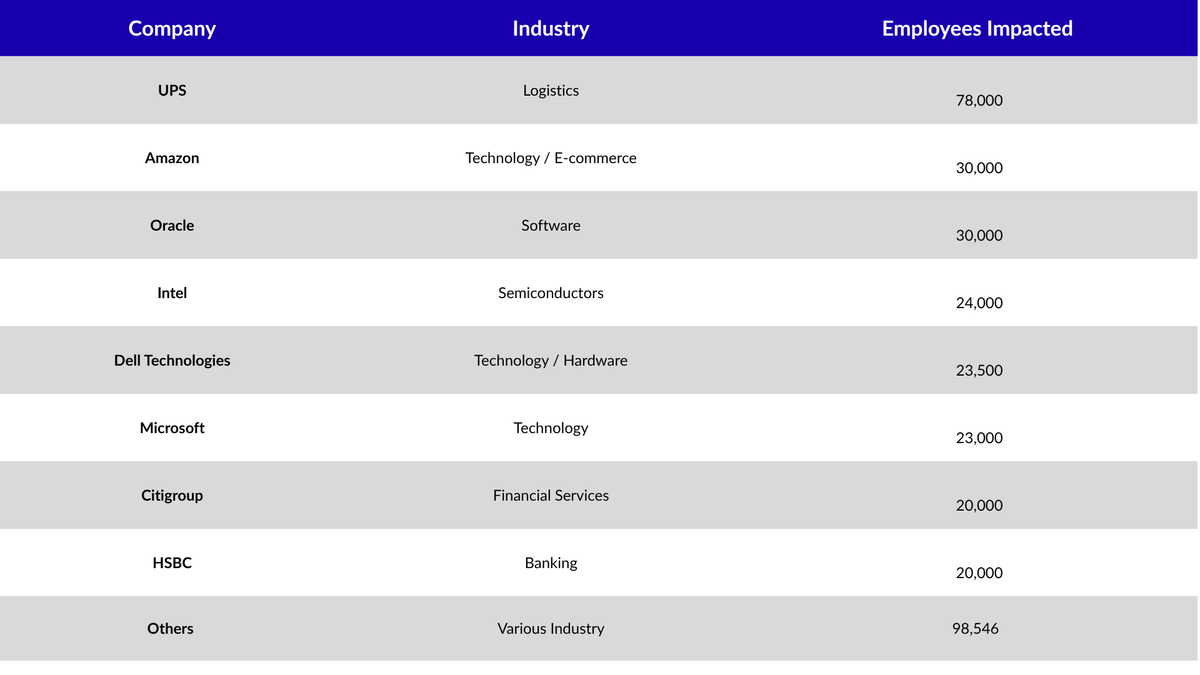
At the same time, a growing number of large corporations have announced significant workforce reductions. UPS, Amazon, Oracle, Intel, Dell Technologies, Microsoft, Citigroup, and HSBC have collectively impacted more than 248,000 employees, excluding additional reductions from various other companies. While management teams rarely identify AI as the direct cause of these layoffs, efficiency and productivity are frequently cited as key objectives behind restructuring initiatives.
This raises an important question: if AI allows businesses to generate more output with fewer workers, are these workforce reductions merely cyclical cost-cutting measures, or are they the early signs of a structural shift in labour demand?
Part 2: The Claim
The automation narrative is ultimately an economic story rather than a technological one. While advances in robotics continue to expand the range of tasks machines can perform, the primary driver of adoption is the potential for cost savings and productivity improvements. With some robots capable of recovering their initial investment within a year or less, businesses have a clear financial incentive to automate repetitive and labour-intensive work. The key implication is that automation does not need to be perfect to be adopted, it only needs to be economically superior to existing labour costs.
Source: CITI, Morgan Stanley, HSBC, JPMorgan, NP Estimates
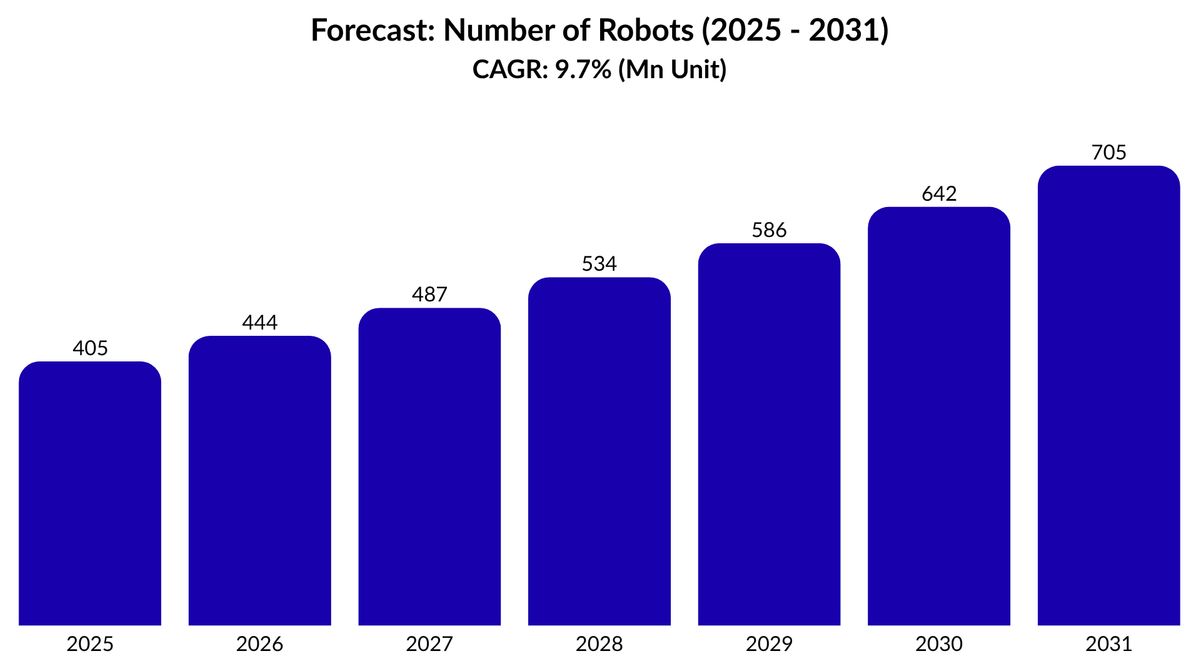
The automation thesis extends beyond chatbots and software assistants into the physical world through robotics and autonomous systems. The global robot population is projected to increase from 405 million units in 2025 to more than 705 million units by 2031, representing a CAGR of 9.7%. This growth is expected to be driven by a wide range of automation technologies including autonomous vehicles, automated guided vehicles (AGVs), drones, humanoid robots, commercial cleaning robots, and various industrial automation systems. The scale of this expansion suggests that businesses are increasingly investing in technologies capable of performing tasks that have traditionally been carried out by human workers.
The projected growth in robot adoption raises an obvious question: what is driving businesses to accelerate investment in automation technologies? While technological improvements have expanded the capabilities of modern robots, the underlying motivation is often economic rather than technological.
Source: CITI, Morgan Stanley, HSBC, JPMorgan, NP Estimates
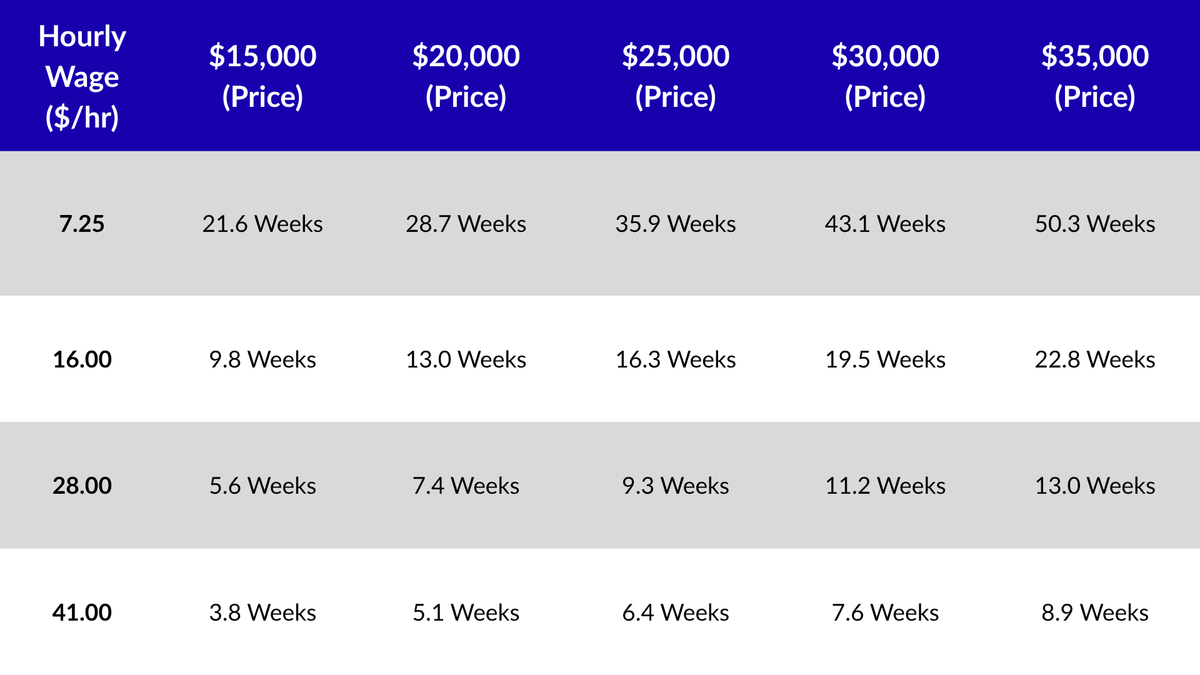
The optimism surrounding automation is not driven solely by technological advancement, but by economics. Based on current estimates, a robot priced between USD15,000 and USD35,000 could reach its payback period in as little as 3.8 to 50.3 weeks depending on the wage level of the worker being replaced. At the higher end of the wage spectrum, a USD35,000 robot replacing a worker earning USD41 per hour could theoretically recover its initial cost in less than nine weeks. Even under the lowest wage assumptions, the payback period remains approximately one year, suggesting that the financial case for automation may be more compelling than many investors initially assume.
The implications of these economics are significant. Unlike human workers who require ongoing wages, benefits, insurance, training, and other employment-related costs, the majority of a robot's expense is incurred upfront. Once the initial investment has been recovered, the remaining operating period potentially generates substantial cost savings for the business. On paper, this creates a highly attractive value proposition, particularly for labour-intensive industries where wages represent a significant portion of operating expenses. As a result, the projected growth in robotics adoption may be driven as much by financial incentives as by technological progress itself.
Part 3: The Logic Behind It
AI-powered automation is not a single technology, but an ecosystem composed of software, semiconductors, sensors, actuators, batteries, and other components working together to perform tasks traditionally carried out by humans. While software provides the intelligence required to interpret information and make decisions, hardware enables those decisions to be executed in the physical world. Understanding this distinction is important because the growth of automation creates opportunities across multiple industries and value chains rather than benefiting a single product or company. As adoption increases, different segments of the ecosystem are likely to capture value depending on the specific application and use case.
Source: CITI, Morgan Stanley, HSBC, JPMorgan, NP Estimates
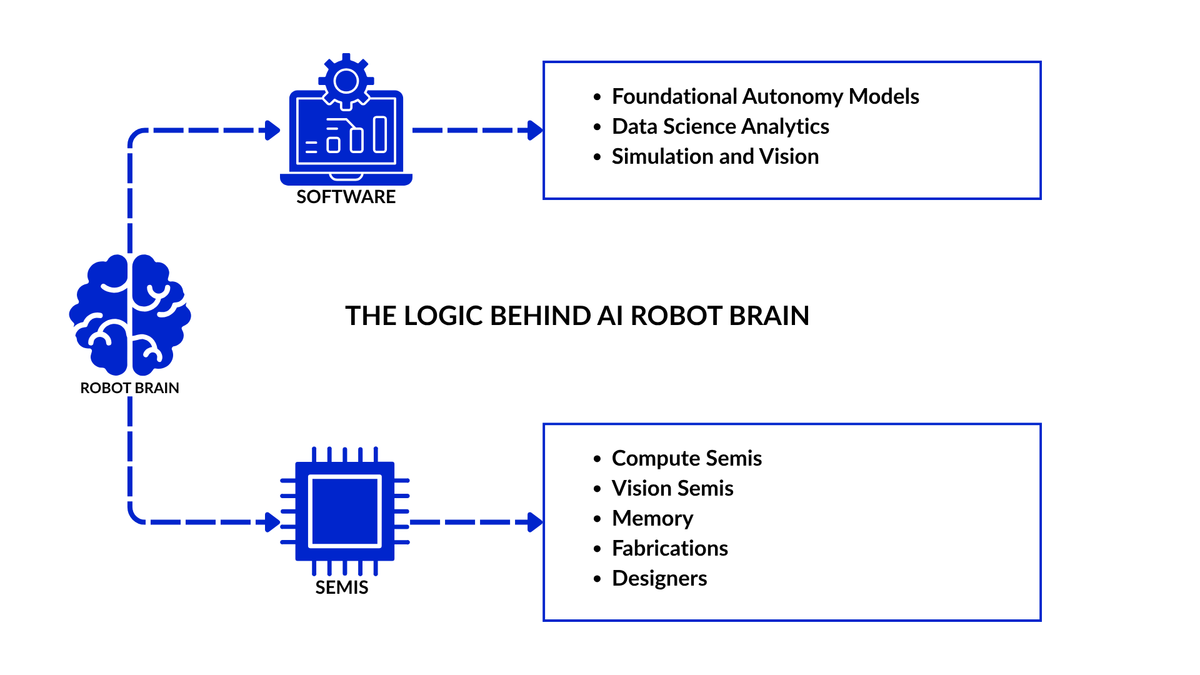
The development of AI-powered robots relies on the integration of software and semiconductor technologies, each serving a distinct role within the system. In simple terms, software determines what a robot should do, while semiconductors provide the capability to actually perform those tasks. Together, these technologies form the foundation of what is commonly referred to as the AI robot brain.
While software and semiconductors form the intelligence layer of an AI system, they represent only part of the automation stack. For a robot to interact with the physical world, decisions generated by the AI brain must be translated into movement, perception, and action. This requires a range of supporting technologies that collectively serve as the robot's physical body, enabling it to operate in real-world environments.
Source: CITI, Morgan Stanley, HSBC, JPMorgan, NP Estimates
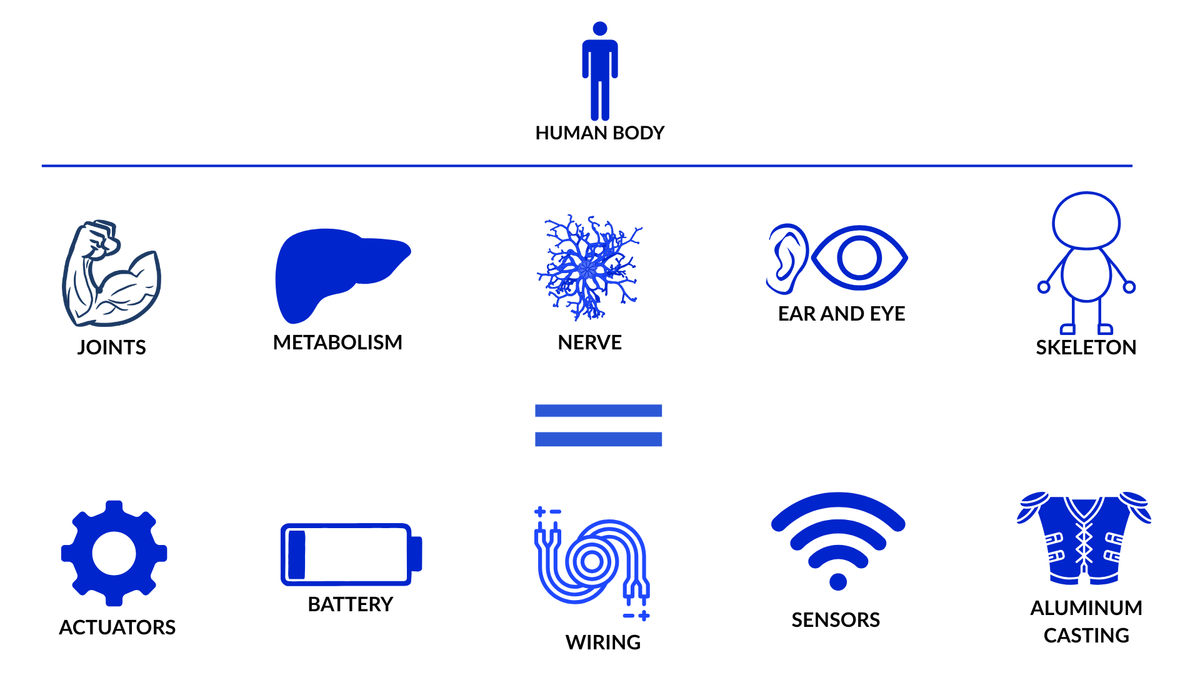
The development of humanoid robots is often compared to replicating the human body through a combination of mechanical and electronic systems. Just as humans rely on muscles, energy, nerves, sensory organs, and a skeleton to function, robots require their own technological equivalents. Actuators enable movement, batteries provide energy storage, wiring facilitates communication, sensors allow environmental perception, and structural components provide physical support. Together, these technologies form the foundation that enables robots to operate and interact with the world around them.
More importantly, this comparison highlights why AI should be viewed as an ecosystem rather than a single product. Different applications require different combinations of hardware and software, creating distinct value chains across industries. Industrial automation relies heavily on actuators and motion control systems, autonomous vehicles depend on batteries and computer vision technologies, while humanoid robots require a broad combination of nearly every component within the ecosystem. As a result, the growth of AI and robotics creates opportunities across multiple industries rather than a single category of companies.
Part 4: The Reality
While AI adoption and automation continue to accelerate, the available labour market data presents a more nuanced picture. Workforce reductions have remained elevated within professional and knowledge-based occupations, while hiring activity has generally weakened since 2022. Although these trends do not prove that AI is directly replacing workers, they suggest that businesses are becoming increasingly focused on productivity and efficiency rather than workforce expansion. The evidence remains inconclusive, but the combination of persistent layoffs and subdued hiring raises the possibility that labour demand may be evolving alongside the adoption of AI technologies.
Source: The FRED, US Department of Labor, Bureau of Labor Statistics of US, NP Estimates
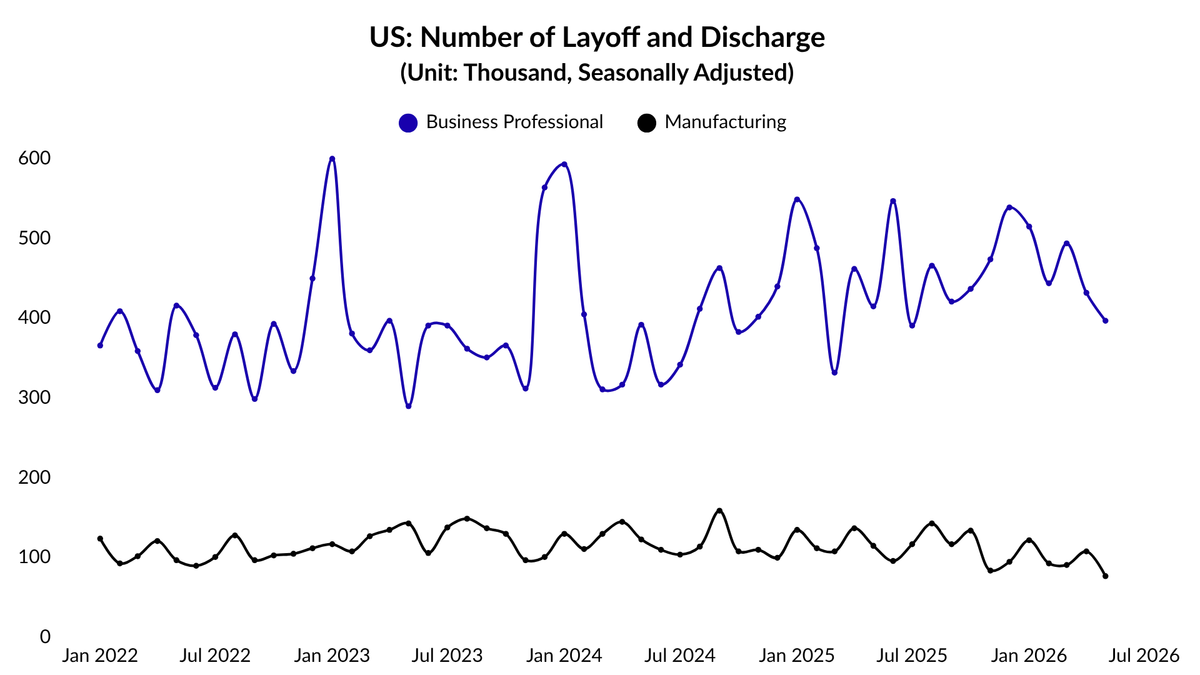
Layoffs and discharges within the Business and Professional Services sector have remained consistently higher than those observed in manufacturing industries. Since 2022, monthly layoffs in professional occupations have frequently ranged between 300,000 and 600,000 workers, while manufacturing layoffs have generally fluctuated between 80,000 and 160,000 workers. More importantly, workforce reductions within professional occupations appear to have remained elevated over the past several years, whereas manufacturing layoffs have shown relatively little change.
The divergence is noteworthy because the first wave of commercial AI applications has largely focused on knowledge-based activities rather than physical labour. Tools such as ChatGPT, Claude, Gemini, coding assistants, and document processing systems are primarily designed to support administrative and office-related tasks. As a result, the data suggests that labour market disruption has so far been more visible among white-collar occupations than among field workers and factory personnel, where automation remains more dependent on robotics and physical infrastructure.
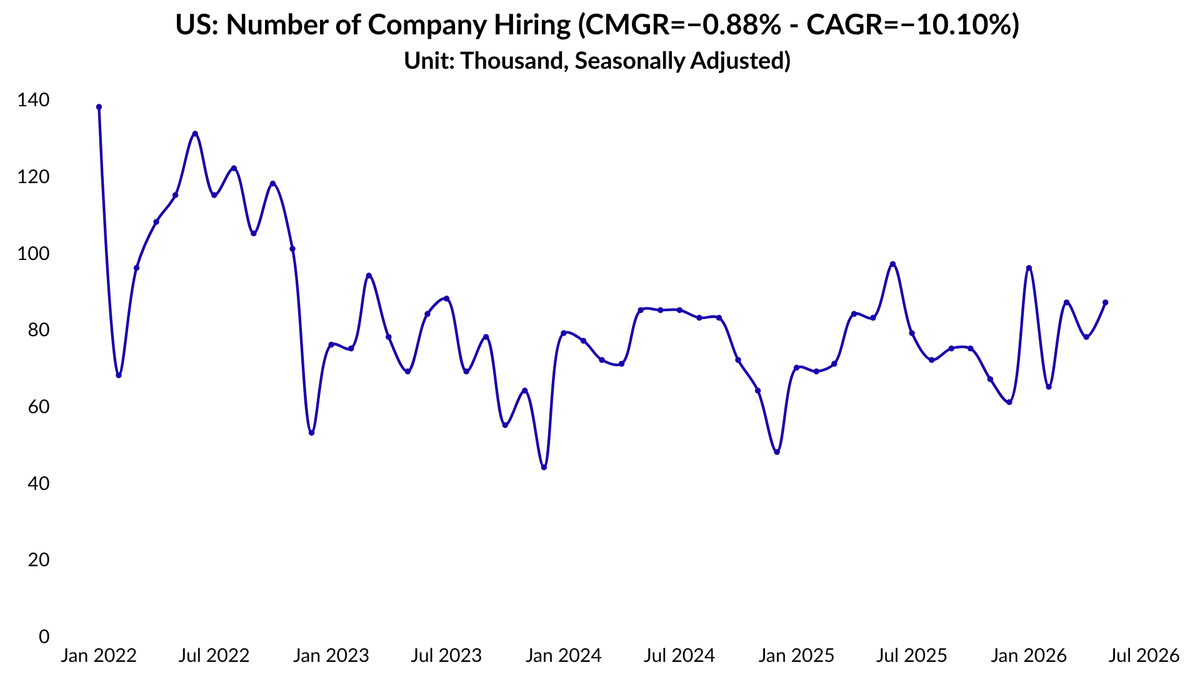
Workforce reductions alone do not necessarily indicate a structural change in labour demand, as layoffs can occur during periods of economic weakness and corporate restructuring. To better understand whether businesses are simply reducing costs or becoming more cautious about workforce expansion, it is useful to examine hiring activity alongside layoff trends.
Source: The FRED, US Department of Labor, Bureau of Labor Statistics of US, NP Estimates
Workforce reductions do not necessarily imply that AI is replacing workers, as layoffs can also occur during periods of economic uncertainty and slower business activity. However, hiring activity provides additional context. Since 2022, the number of company hiring announcements has generally trended lower, declining from more than 130,000 positions at its peak to a range of approximately 85,000 positions in recent years. The persistent weakness in hiring suggests that businesses may be becoming more selective in expanding their workforce, regardless of whether the underlying driver is economic conditions.
The combination of elevated layoffs and subdued hiring presents a more interesting picture than either dataset alone. If workforce reductions were purely cyclical, hiring activity would typically recover alongside improving business conditions. Instead, companies appear increasingly focused on efficiency and productivity initiatives, themes that have become closely associated with the rapid adoption of AI technologies. While the data does not establish a direct causal relationship between AI and declining hiring demand, it does indicate that businesses are becoming more cautious in adding headcount despite continued investment in automation and productivity-enhancing technologies.
Part 5: The Winners
Despite ongoing debate regarding the impact of AI on employment, capital continues to flow aggressively toward companies and technologies positioned to benefit from the automation ecosystem. Elevated valuation multiples, increasing patent activity, and sustained investment across the sector suggest that investors remain focused on the potential productivity gains offered by AI. Whether or not automation ultimately transforms labour markets, the market has already identified its preferred beneficiaries. The primary winners are not necessarily the workers being displaced, but the companies, technologies, and institutions enabling the next wave of productivity growth.
Source: Tradingview, NP Estimates
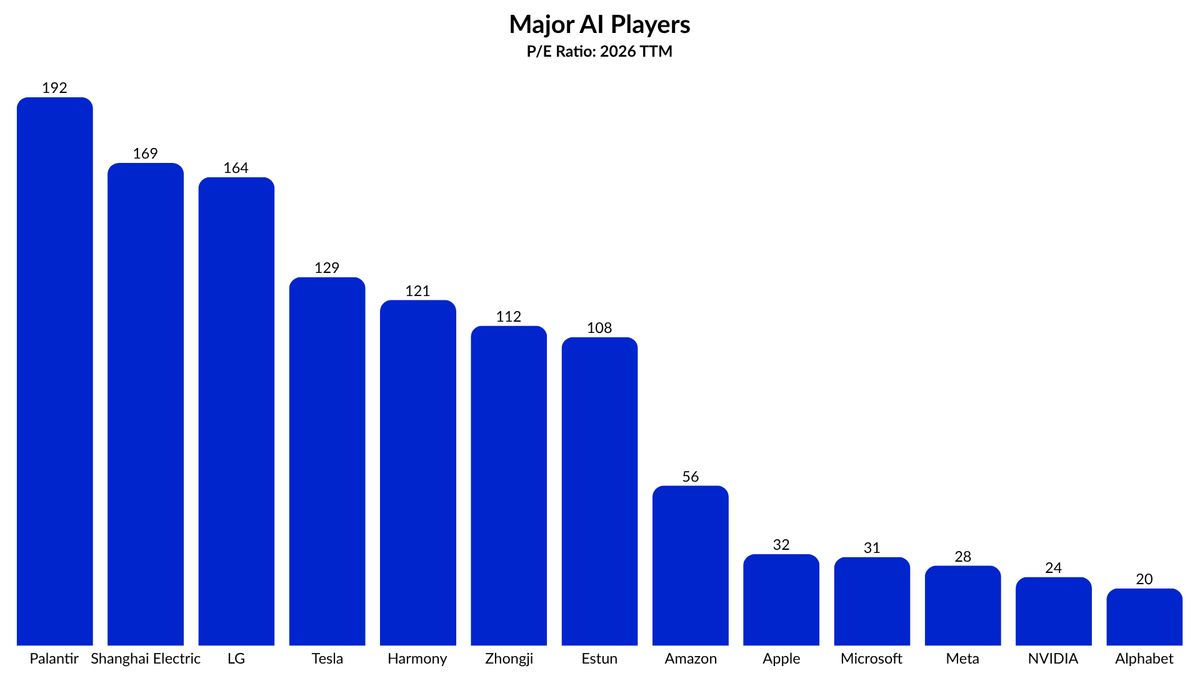
Despite growing concerns surrounding automation and the long-term impact of AI on the workforce, investors continue to place significant value on companies positioned to benefit from the AI ecosystem. This optimism is reflected in the valuation multiples of many AI-related companies, where investors are willing to pay substantial premiums for future growth. Palantir currently trades at approximately 192x earnings, followed by Shanghai Electric at 169x, LG at 164x, Tesla at 129x, Harmony at 121x, Zhongji at 112x, and Estun at 108x. Even some of the world's largest technology companies continue to command elevated valuations, with Amazon, Apple, Microsoft, Meta, NVIDIA, and Alphabet trading at approximately 56x, 32x, 31x, 28x, 24x, and 20x earnings, respectively.
The optimism surrounding AI extends beyond public market valuations. Capital allocation, and research development all point toward the same conclusion: businesses and government will continue to increase investment in AI-related technologies despite ongoing uncertainty surrounding the long-term impact on employment.
Source: OECD, NP Estimates
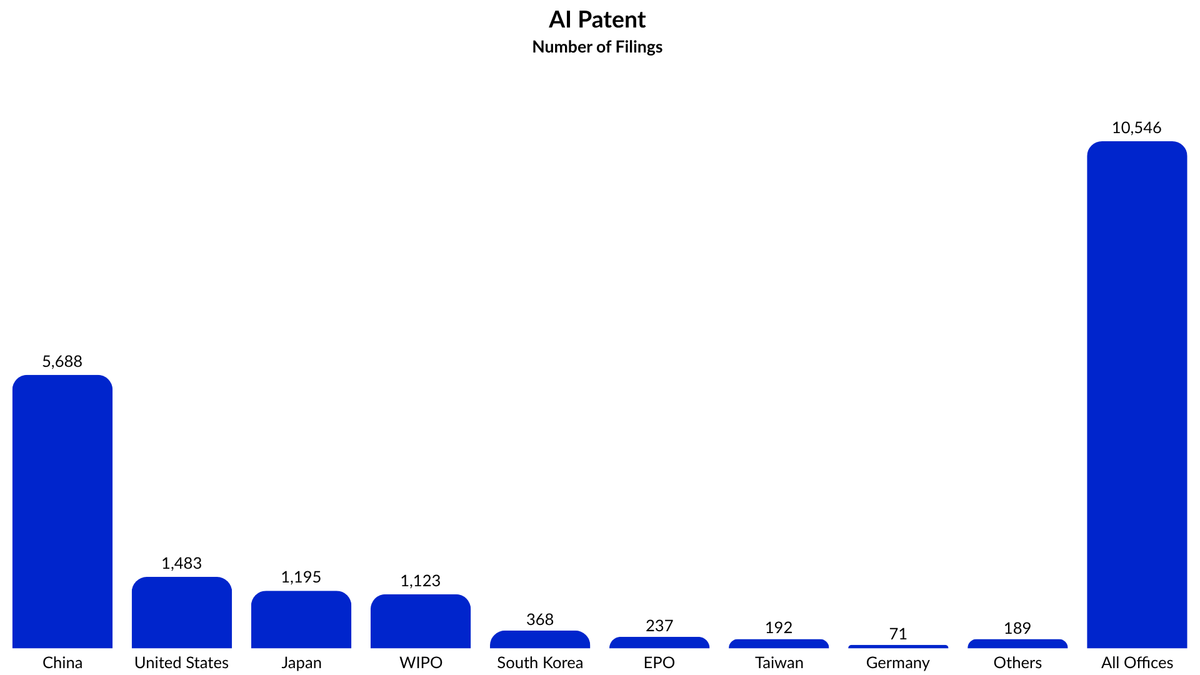
The rapid development of AI is also reflected in global innovation activity. AI patent filings have surpassed 10,500 applications across major patent offices, highlighting the growing commitment of governments, corporations, and research institutions to the technology. China leads the race with 5,688 filings, accounting for more than half of all recorded applications, followed by the United States with 1,483 filings and Japan with 1,195 filings. The concentration of patent activity among the world's largest economies suggests that AI is no longer viewed as a niche technology trend, but rather as a strategic capability that nations and corporations are actively competing to develop and commercialise.
The evidence presented throughout this article points toward a common theme: businesses, investors, and governments are prioritising productivity and efficiency above all else. AI adoption continues to accelerate and companies are increasingly investing in technologies capable of improving output while reducing costs. While the long-term impact on employment remains uncertain, the direction of travel appears clear.
Businesses, investors, and governments are prioritising productivity and efficiency above all else. As previous technological revolutions have shown, some jobs may disappear, others will emerge, and many will evolve. The challenge is not whether AI will change the world, but whether workers can adapt alongside it. In an economy increasingly driven by productivity and efficiency, the ability to evolve may become just as important as the technology itself.
Editor's Take
The research above deliberately avoids a clean conclusion, an appropriate restraint. The honest answer is that we don't yet know whether AI is structurally replacing workers or whether the labour market data reflects a cyclical moment that will normalise. Right now, the evidence is pointing in both directions.
What the data does show clearly is where capital is going: the P/E multiples, the patent filings, the $510 billion in H1 2026 venture funding we covered elsewhere on the blog, the robotics adoption curve. None of these are signals of uncertainty, but of conviction from the people allocating the most money, and investors have already decided which side of this debate they are on through the companies they are backing.
For private market investors, the more useful frame is not "will AI replace jobs" but "which companies in the AI and automation stack are still private, growing fast, and accessible before public market pricing takes over." The picks-and-shovels argument (semiconductors, sensors, actuators, autonomy software, data centre infrastructure) is where private capital has been moving fastest, and where some of the most interesting pre-IPO opportunities sit. As we covered in our piece on AI and energy demand and our analysis of the Quantum Systems defence tech raise, the infrastructure layer underneath AI is where a significant share of institutional capital is moving right now. The employment debate will play out over a decade. The investment window is shorter.
NonPublic Pty Ltd (ABN 49 607 216 928) holds Australian Financial Services Licence #482668. Investments are available to wholesale and sophisticated investors as defined under the Corporations Act 2001. This content is general in nature and does not constitute financial product advice. It does not take into account your objectives, financial situation, or needs. Investing in private markets involves significant risk, including the potential loss of your entire investment. Past performance is not a reliable indicator of future results. You should obtain independent financial advice before making any investment decision.
The Pre-IPO & Private Investment Marketplace for Australian Wholesale Investors
Get started today to learn how NonPublic can give you access to exclusive deals.
Get Started